Skip to content
  • Shop
  • Login
  • Cart
Kombucha Brewers International
  • WHY KBI
    • Mission
    • KBI Code of Ethics
    • Industry Info
    • Member Benefits
    • Join Now
  • Resources
    • Member Forum & Resource Library
    • Kombucha Code of Practice
    • Industry FAQ
    • KBI Approved Ethanol Testing Methodology
    • Best Practices
  • Our Members
    • Brewery Members
    • Supplier Members
    • Partners
  • NEWSROOM
    • Press
    • Blog
    • SYMBIOSIS Magazine
    • Achievements
  • Events
    • Kombucha Kup
    • KombuchaKon 2023
    • World Kombucha Day 2.21
    • Webinar Wednesday
  • Research & Advocacy
    • Kombucha Research Database
    • Lobbying
    • Advocacy Toolkit
    • Laraine Dave Kombucha Education & Lobbying Fund
  • For Kombucha Lovers
    • World Kombucha Day 2.21
    • Kombucha FAQ
    • Kombucha Taproom Tourism Guide
    • Consumer’s Guide to Kombucha

Author: KBI Admin

KombuchaKon ’20 Lab Hands-On Day

We are always searching for ways to create additional value for all of our members. To that end, we are spearheading a new opportunity for providing education and hands-on training at KombuchaKon ’20.  Our theme this year is “Leveling Up” and one of the areas our members have mentioned as a knowledge gap is in hands […]


Wednesday, 15th January 2020

We are always searching for ways to create additional value for all of our members. To that end, we are spearheading a new opportunity for providing education and hands-on training at KombuchaKon ’20.  Our theme this year is “Leveling Up” and one of the areas our members have mentioned as a knowledge gap is in hands on experience working with lab and testing equipment to ensure the quality control aspects of brewing commercial Kombucha.

We are excited the following speakers and companies will be partnering with us to bring you this exciting opportunity.

The Core 4 – pH, Brix, TA & ABV with Evan Beyers & Kelley Freeman (BABS)

  • Educate attendees about basic lab practices (safety, pipetting, mixing, and note-taking)
  • Teach attendees the theory behind pH and how to optimally take pH samples. Have them perform their own pH measurements with demo equipment
  • Show attendees how to properly clean and maintain pH probe to get the maximum life out of probe
  • Educate attendees about the theory and background of a titration
  • Introduce attendees to the sour/sweet ratio (TA/Sugar).
  • Have them perform demo titrations using RedCheck
  • Explain to attendees how to use collect sugar and TA data to build sour/sweet ratio

RIDA®CUBE for In-House Enzyme Testing – Sugars, Acids, Ethanol and more (R-Biopharm)

  • Learn how to run enzymatic test kits on the RIDA®CUBE system including ethanol, organic acids, and sugars.
  • Learn how to use pipettors & discuss common pipetting errors (and how to avoid them!)
  • Discuss potential sampling issues.

Ethanol & Glucose Testing (OptiEnz Sensors)

What’s in your kombucha? It’s a critical question – one requiring fast and accurate measurements for the effective monitoring of ethanol and glucose concentrations in commercial kombucha processes. Proper monitoring results in higher product quality, product consistency, process improvement and efficiency, and verification that the alcoholic content doesn’t exceed the 0.5% ABV threshold for non-alcoholic beverages. OptiEnz has developed a fast, accurate, and low-cost analyzer for measuring ethanol and glucose in kombucha. The analyzer is based on optical enzymatic biosensing technology, meaning that enzymes and light are used together to accurately measure the alcohol and sugar in the beverage. In this workshop, attendees will learn about optical enzymatic biosensing principals as well as how to calibrate the instrument, make measurements in kombucha, and interpret the data produced.

  • Learn about optical enzymatic biosensor principals and applications
  • Hands-on instruction for making measurements with an OptiEnz analyzer.
  • Discussion about interpreting data.

From Distillation to Alcolyzer (Anton Paar)

  • Learn about tools and techniques to monitor and control your fermentation process

FUN-damentals of Kombucha Microscopy with Keisha Rose Harrison (OSU)

  • How to prepare a sample for plating
  • How to select media
  • How to perform a dilution series for plating
  • How to streak or spread plate to decide which technique works best
  • How to colony pick
  • DNA extraction from an isolated colony
  • How to prepare a wet mount for microscopic view
  • How to use a microscope
  • How to distinguish between yeast & bacteria under the microscope
  • How to characterize morphology of yeast & bacteria under the microscope
  • How to distinguish between AAB & LAB under the microscope

Attend just 1 session for $49 or attend all 5 for $199!
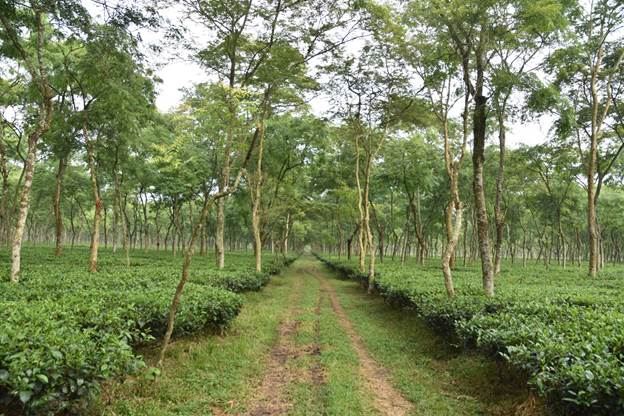
 

Progress on The KOMBUCHA Act Continues in 2020

By Dave Ransom of McDermott, Will & Emery Late in December, right before the holidays, the U.S. Congress did what it often does: At the literal 11th hour, Congress passed legislation that will fund the operations of the federal government through September 30, 2020. Had Congress failed to pass these appropriations bills (or had President […]


Wednesday, 15th January 2020

By Dave Ransom of McDermott, Will & Emery

Late in December, right before the holidays, the U.S. Congress did what it often does: At the literal 11th hour, Congress passed legislation that will fund the operations of the federal government through September 30, 2020.

Had Congress failed to pass these appropriations bills (or had President Trump refused or declined to sign them into law), the federal government (or big parts of it) would have shut down due to a lack of funding.

Neither Democrats nor Republicans wanted that this year. Instead, the leaders in each party, and the President, cooperated and negotiated on these bills. And now, the federal government will continue to operate.

Everyone in Washington, D.C., knows that these so-called “omnibus” appropriations bills (where several funding bills are packaged into one or two bills) are really nothing less than an opportunity to tuck extraneous measures that are unrelated to the underlying appropriations bills into those bills.

Predictably, that’s exactly what happened this year. That is, deep in the nearly 2,000-page “Further Consolidated Appropriations Act,” (H.R. 1865) – a bill that funds, among others, the departments of Labor, Health and Human Services, and Agriculture – is “Division Q – Revenue Provisions.”

Division Q is where the Kombucha Brewers International (KBI) and our allies on Capitol Hill had hoped to place the “KOMBUCHA Act” (S. 926/H.R. 1961) to ensure its enactment into law.

Recall that our bipartisan bill, the KOMBUCHA Act, is non-controversial and would do one thing: It would raise the alcohol by volume (ABV) threshold for Kombucha to 1.25% ABV from the current threshold of 0.5% ABV. Today, as you know, if your Kombucha leaves the brewery at, say, 0.4% ABV but increases to above 0.5% ABV after leaving the brewery, you are subject to federal excise taxes intended for beer.

That is a patently unfair and outdated result. The Congress never intended to make Kombucha subject to federal excise taxes intended for beer. So today, KBI and our friends in Congress are trying to change the law by increasing the threshold for Kombucha to 1.25% ABV. Only Kombucha above that level (1.25%) would be subject to federal excise taxes if the KOMBUCHA Act became law.

Unfortunately, however, Congressional leaders chose to strictly limit the tax provisions included in “Division Q” to already expired or expiring tax provisions. For example, the “mine rescue team training [tax] credit” expired on December 31, 2017, nearly two full years ago. In Division Q, it was extended by simply striking the date December 31, 2017, and inserting “December 31, 2020.”

Similarly, American small craft beer brewers have enjoyed a lower federal tax rate on the beer they produce since January 1, 2018. However, that lower rate was set to expire on December 31, 2019. In Division Q of the Further Consolidated Appropriations Act, the 2019 date was struck and in its place was inserted, “December 31, 2020.”

Small, craft beer brewers – who have been arguing to make the lower tax rate permanent – will enjoy the lower rate for at least one more year. Something (a one-year extension of lower rates) is better than nothing.

And so it went in “Division Q – Revenue Provisions.” KBI and our allies had hoped that Congressional leaders would be open to including additional, non-controversial provisions in that section of the bill. They did that in 2015 when Congress passed the “Protecting Americans from Tax Hikes (PATH) Act.” For example, in the PATH Act, Congress tweaked several provisions related to hard cider.

This year, though, Congress took a much more limited approach.

Despite all this, KBI, the Kombucha industry, and our allies have real opportunities in 2020 to try to enact the KOMBUCHA Act.

Many tax provisions were left on the cutting room floor in December 2019. Chief among those is a tax change that would benefit retailers who make improvements to their property. The retailers will likely pull out the stops to try to secure passage of their provision. Likewise, there are an array of so-called “technical corrections” that were mostly just drafting errors in the Tax Cuts and Jobs Act of 2017. Republicans, in particular, want to clean up those technical corrections.

Any effort to address a tax provision in Congress in 2020 is an opportunity for KBI to try to include the KOMBUCHA Act and secure passage of it.

In the meantime, we will be covering Capitol Hill to educate lawmakers and staff about the need for the KOMBUCHA Act and to seek their support for including it in any tax legislation considered by Congress.

We hope you will consider joining this effort in 2020 to spread the word about the growing and vibrant Kombucha industry, and the need to enact the KOMBUCHA Act.


NEXT HILL CLIMB – MAY 13th, 2020 – Washington, DC

Stay tuned for more details on how you can engage the civic process to benefit your business and industry. If you are interested in participating, please send an email to admin@kombuchabrewers.org – ALL KOMBUCHA BREWERS ARE INVITED TO ATTEND!

Marian Flaxman, current LGO coordinator, will be reaching out to brands in various states as part of our continued effort to educate and inform our Congresspeople & Senators about how the KOMBUCHA Act will benefit their constituents and our growing industry.

Dave Ransom will be joining us at KombuchaKon ’20 to present the latest update at the Brewery Members Meeting. Register today!


David Ransom

McDermott Will & Emery LLP

Teatulia Bangladesh Trip

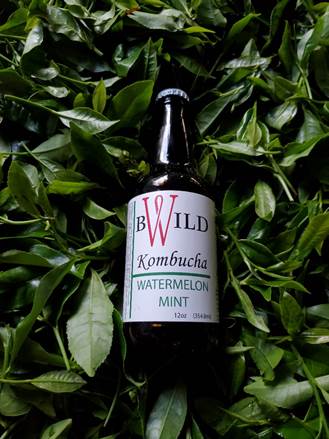
Teatulia Bangladesh Trip By Barbara Wildhaber, BWild Kombucha Our trip to Bangladesh to visit the Teatulia tea garden was truly amazing!     This trip allowed us to witness firsthand the amount of care and detail that goes into the whole process of making their teas. From visiting their nursery where they grow starts from […]


Monday, 13th January 2020

Teatulia Bangladesh Trip

By Barbara Wildhaber, BWild Kombucha

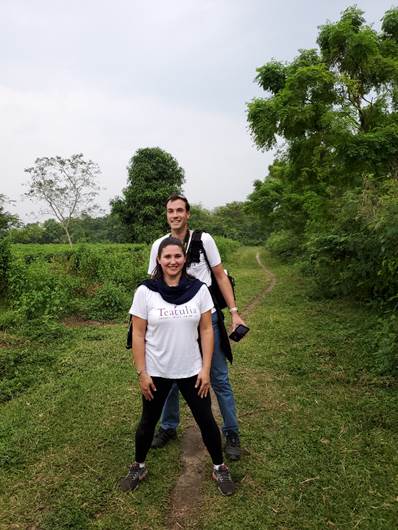
Our trip to Bangladesh to visit the Teatulia tea garden was truly amazing!


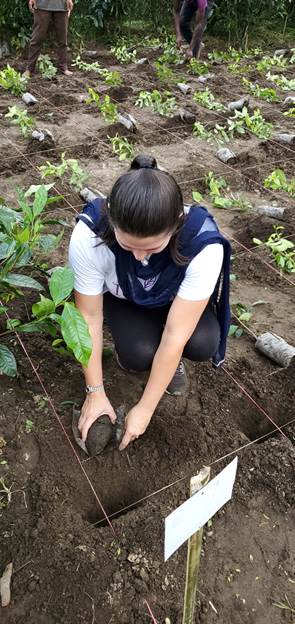
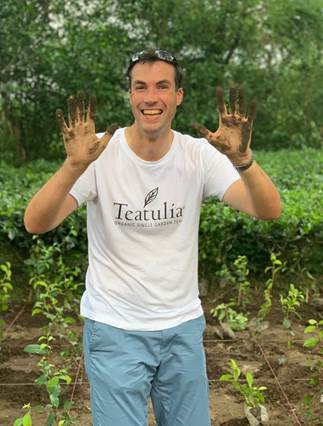
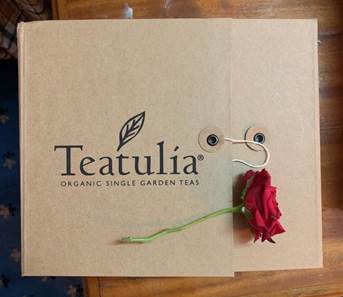
This trip allowed us to witness firsthand the amount of care and detail that goes into the whole process of making their teas. From visiting their nursery where they grow starts from their mother bushes, to helping plant small tea plants in the garden, to seeing the workers hand plucking leaves, and then finally processing those tea leaves themselves in their tea factory.


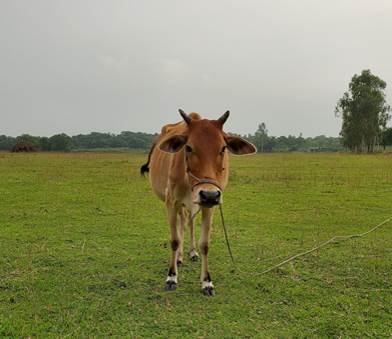
Did you know they don’t even use conventional organic pesticides in their garden? They make their own pesticides out of herbs and plants to spray on the tea bushes as needed. Likewise, Teatulia also makes their own fertilizer and bio-diesel! They have a cow lending program that allows them to give cows to women as a business opportunity (which is unheard of in a male dominated country) to pay back the loan in cow dung that Teatulia “purchases” from them. The women get to keep the milk and can sell the extra at the market making money for their families. Some of the women who originally started with the program about 10 years ago now have 15-18 cows and now employ their husbands to help them take care of the cows!
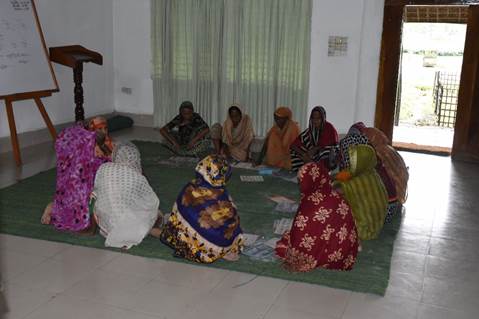


Teatulia has also built a wonderful relationship with their workers by empowering them to learn what we would consider the basics of school (reading, writing and arithmetic). School is not free in Bangladesh!!! You must pay to even attend public school. Thus, only those with money or sometimes just one child from a family can attend school and that is usually a boy since they are more employable as adults.
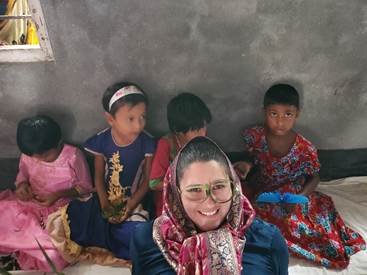


They even offer pre-school care for the workers. This is not just play time, but they are also teaching these kids about hygiene, counting and other basic skills through their time together. We were lucky enough to have the kids sing a few songs for us and did a craft with them. They made me glasses and rings out of leaves.


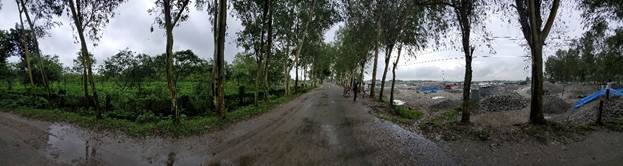
Even being able to see the two sides of the road was both amazing and sad at the same time. On one side of the road you have the beautiful lush tea garden. And the other side of the road is the barren land from rock lifting that is actively happening. Rock lifting is illegal, but it is still actively happening all over. It is like night and day the difference and the road is really like drawing a line in the sand.


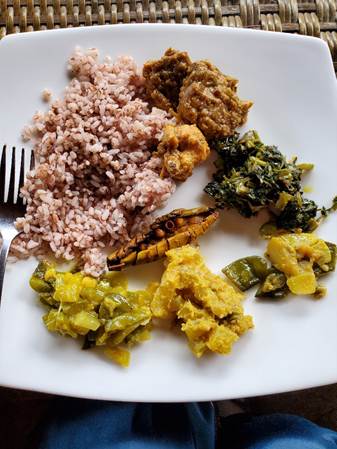
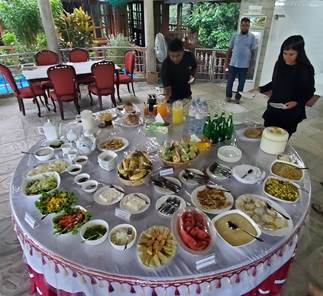
Oh, and we cannot forget about the food. We were immersed in their culture with being able to enjoy traditional breakfast, lunches and dinners at the tea garden. Each meal there was a huge, round 10 foot table covered in a full array of flavors and textures. We tried so many different veggies and dishes that I have no idea what I was eating most of the time. But the flavors were amazing, they use so many different spices and combinations than we do. It was spicy but not a hot spicy, a flavorful spicy taste to each dish.  One of my favorites was the rice dish at breakfast (it was like cream of wheat but much better, since I never cared for cream of wheat). John’s favorite was the Parathas with honey on them. I also had a few veggie dishes that I would make sure I had a little extra of on my plate each meal when they served them.


To experience all of this firsthand was truly a gift and one we will not forget. I encourage everyone to get their cards filled out this year (at KKon 2020) so you can enter to win a trip of a lifetime, as I guarantee that you will never look at tea the same way again.


Meet Our Members – Happy Belly Ferments (New Zealand)

  Jo Kempton, Happy Belly Ferments, New Zealand  Q: When did you first discover kombucha? 7 years ago I was introduced to kombucha and water kefir by a specialist who was helping my special needs son with his health. Probiotics were recommended as important to improve his gut health and in turn his behaviour, physical […]


Thursday, 9th January 2020


Jo Kempton, Happy Belly Ferments, New Zealand 

Q: When did you first discover kombucha?

7 years ago I was introduced to kombucha and water kefir by a specialist who was helping my special needs son with his health. Probiotics were recommended as important to improve his gut health and in turn his behaviour, physical and emotional health. I started brewing kombucha and water kefir as well as making saukeraut and kimchi. The fermented foods and drinks certainly helped a lot. The whole family started drinking kombucha and we loved it.

Q: Why did you start your own kombucha company?

I had been making kombucha and water kefir for my immediate family and started sharing it with my extended family and friends. They loved it so much they encouraged me to start selling it. It was quite a process to go from home production on the kitchen bench top to commercial production but I’m so pleased I did.

Q: What is your favorite flavor of kombucha? 

Kate’s Kombucha Blueberry Flavour

Q: What is your former/current other life or career?

As well as being a kombucha brewer I am an Energy Healer. I specialise in helping people clear Emotional Baggage from the past which may be holding them back from living the life they dream of. In an earlier part of my life I worked in the banking industry. I also worked for an apple juice manufacturer which gave me loads of useful beverage experience which got me started as a commercial kombucha brewer.

Q: What is a saying that you live by?

Just Keep Going!

Distribution Guide for Commercial Kombucha

Distribution Guide for Commercial Kombucha Presented By: Danny Metcalf, Brew Dr. Kombucha Danny Metcalf is the Director of Business Operations at Brew Dr Kombucha. His primary focus is scaling the fast growing organization in line with the company’s sustainability initiatives. He was responsible for orchestrating B Corp certification at Brew Dr and continues to oversee […]


Tuesday, 31st December 2019

Distribution Guide for Commercial Kombucha

Presented By:
Danny Metcalf, Brew Dr. Kombucha

Danny Metcalf is the Director of Business Operations at Brew Dr Kombucha. His primary focus is scaling the fast growing organization in line with the company’s sustainability initiatives. He was responsible for orchestrating B Corp certification at Brew Dr and continues to oversee the sustainability department. Prior to working at Brew Dr, Danny was an analyst at the Department of Energy.

Cory Mathews, Lazy Beach Brewing

Cory and his wife Jess, started Lazy Beach Brewing in 2014 and began making Hard Kombucha in 2015. We self distribute to local bars and restaurants as well as create all sorts of different flavors for our taproom.

The committee met frequently between May and August 2019 to hash out the details of this info; we’re excited to share what we discovered and get additional feedback to include additional resources.

  • Learn about the various methods of distribution and route to markets for Kombucha brands of any size (including BIP)
  • Define appropriate margins at retail level
  • Broker vs in-house: when to align with a broker at retail
  • How to manage in-house fleet including at what point does it make sense to hire a delivery driver and schedule regular maintenance

We invite you to listen in and ask questions. FREE for KBI Members; $40 for non-members.

SIGN UP TODAY TO ATTEND THE WEBINAR

January 15th 1pm PST

Details

DATE: January 15th, 2020
TIME: 1-3pm PST; 30 min presentation & 15 min Q&A
COST: Free for KBI members, $40 for non-members
REGISTRATION LINK
Have questions? Please send in advance to admin@kombuchabrewers.org

Want to see other KBI webinars? Find them here.

Not a KBI Member, JOIN TODAY

Meet Our Members – Wolseley Kombucha (Canada)

Michelle Leclair, Wolseley Kombucha, Winnipeg, Manitoba, Canada  Q: When did you first discover kombucha? I first discovered kombucha while I was in Hawaii attending Wanderlust Yoga Festival back in 2015. I suffered from a lot of digestive issues, and kombucha made me feel so good that I was determined to learn to brew for myself. […]


Thursday, 26th December 2019

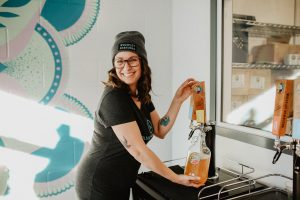
Michelle Leclair, Wolseley Kombucha, Winnipeg, Manitoba, Canada 

Q: When did you first discover kombucha?

I first discovered kombucha while I was in Hawaii attending Wanderlust Yoga Festival back in 2015. I suffered from a lot of digestive issues, and kombucha made me feel so good that I was determined to learn to brew for myself.

Q: Why did you start your own kombucha company?

Wolseley Kombucha was created very organically. I was brewing kombucha for myself, and my family and my yoga teachers, and from there people in the community kept asking me to brew kombucha for them so the business kept evolving and growing to what it is today.

Q: What is your favorite flavor of kombucha? 

My FAV flavour is Elderflower Ginger by Salt Spring Island Kombucha.

Q: What is your former/current other life or career?

I am on maternity leave from my MRI technologist job at a medical clinic. So while being a mother and opening Manitoba’s first kombucha tap room, it’s been a wild busy year to say the least. Loving every minute of it!

Q: What is a saying that you live by?

LOVE WHAT YOU DO is our mantra and we believe it!

Proposition 65 and Alcohol

What is Proposition 65? The Safe Drinking Water and Toxic Enforcement Act was approved by California voters in 1986 and is known today as Proposition 65 and requires the State of California to publish a list of chemicals and substances known to cause cancer or birth defects or other reproductive harm. Proposition 65 is administered […]


Thursday, 19th December 2019

What is Proposition 65?

The Safe Drinking Water and Toxic Enforcement Act was approved by California voters in 1986 and is known today as Proposition 65 and requires the State of California to publish a list of chemicals and substances known to cause cancer or birth defects or other reproductive harm. Proposition 65 is administered by the Office of Environmental Health Hazard Assessment (OEHHA). OEHHA has listed over 900 chemicals, including naturally occurring and synthetic chemicals present in foods, beverages, pesticides, commonly used household products and personal care products, and more. Proposition 65 is a right-to-know statute; it does not prohibit businesses from selling anything in California. Rather, it requires businesses to provide a “clear and reasonable” warning to Californians before knowingly and intentionally exposing them to a listed chemical or substance. A warning must be given for listed chemicals and substances unless exposure is low enough to pose no significant risk of cancer, or is significantly below levels observed to cause birth defects or other reproductive harm.

Proposition 65 And Alcoholic Beverages

OEHHA listed alcohol under Proposition 65 over two decades ago, first listing “ethyl alcohol in alcoholic beverages” as a reproductive toxicant in 1987, then “alcoholic beverages when associated with alcohol abuse” as a carcinogen in 1988, and most recently, “alcoholic beverages” as a carcinogen in 2011.

Safe Harbor Levels

For chemicals listed as carcinogens, the “no significant risk level” (NSRL) is defined as the level of exposure that would result in not more than one excess case of cancer in 100,000 people exposed to the chemical over a 70-year lifetime. For chemicals listed as reproductive toxicants, the “no observable effect level” is determined by identifying the level of exposure that has been shown to not pose any harm to humans or laboratory animals. This number is then divided by 1,000 to establish the “maximum allowable dose level” (MADL). OEHHA has established NSRLs and MADLs known as “safe harbors” for some, but not all, of the listed chemicals. If your product contains a Proposition 65 listed chemical at levels below the established safe harbors, you do not need to provide a warning.

No Safe Harbor Guidance For Alchohol

OEHHA has not established safe harbors for any of the Proposition 65 alcohol listings. Businesses that expose individuals to a Proposition 65 listed chemical that does not have an established safe harbor must either provide a Proposition 65 warning or must show that the exposure level will not pose a significant risk of cancer or reproductive harm. Determining the anticipated exposure level is not a simple endeavor and often requires an expensive scientific exposure assessment.

How to Warn

Although most manufacturers may apply Proposition 65 warnings directly to product labels, this is not the case for alcoholic beverages. Why? All alcoholic beverage labels must be approved by the Federal Alcohol & Tobacco Tax and Trade Bureau (TTB) and contain the federal warning on the products. The federal warning is not the same as—and is not compliant with—the Proposition 65 warning requirements and thus does not provide a safe harbor under California law. The above warning does not apply to non-alcoholic beverages. For retail sales of alcoholic beverages in stores, businesses may warn by (1) posting the above warning on an 8 ½ x 11-inch sign in at least 22-point font, placed at eye level so it is conspicuous to customers upon entering the area where alcoholic beverages are sold, or by (2) posting the above warning on a 5 x 5-inch sign in at least 20-point font, placed at each retail point of sale or display so it is conspicuous to customers. For alcohol provided for consumption on-premises, or sold over-the-counter, the above warning language must be provided on the drink menu. For alcohol sold or distributed within California through delivery services, a warning must be placed on or in the shipping container/delivery package, in a font at least as big as the rest of the text on the package

Proposition 65 and Non-Alcoholic Beverages

While Proposition 65 is nothing new for the alcoholic beverage industry, Proposition 65 private enforcers have recently targeted traditionally non-alcoholic products based on the alcohol-related Proposition 65 chemicals. Several kombucha retailers and manufacturers have recently been served with notices of violation based on alleged exposure to “ethyl alcohol in alcoholic beverages” and “alcoholic beverages.” In many cases, kombucha is not produced or marketed as an alcoholic beverage, but trace amounts of alcohol may result from the fermentation process, none of which are knowingly or intentionally added to the product before sale. Proposition 65 does not define an alcoholic beverage. Rather, it is defined in the Alcoholic Beverage Control Act as containing 0.5% alcohol by volume or more. See CA Bus. & Prof. Code § 23004. It is yet to be seen how the plaintiffs’ bar will attempt to tie the 0.5% ABV definition to Proposition 65, a potential safe harbor level, or the risk of cancer or reproductive toxicity. In the meantime, it is important to have a comprehensive compliance program in place with regular product testing.

Have you received a Prop 65 Notice? Email info@kombuchabrewers.org for guidance & support (membership not required)

References

https://www.p65warnings.ca.gov/products/alcoholic-beverages

Proposition 65 and Alcohol

Meet Our Members – The Bucha’s Dog (United Kingdom)

Dr. Peter Barrett, The Bucha’s Dog, Belfast, United Kingdom Q: When did you first discover kombucha? I first discovered kombucha around six years ago. I read about it before I ever saw or tasted it. It motivated me to source a scoby online and the first kombucha I ever tasted was my own. It was […]


Thursday, 19th December 2019

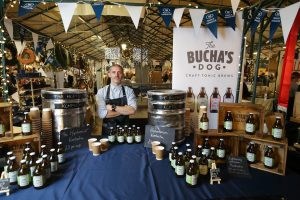
Dr. Peter Barrett, The Bucha’s Dog, Belfast, United Kingdom

Q: When did you first discover kombucha?

I first discovered kombucha around six years ago. I read about it before I ever saw or tasted it. It motivated me to source a scoby online and the first kombucha I ever tasted was my own. It was a bit of a leap of faith to drink what I produced without anyone telling me it was OK. But it turned out to be not too bad and I was hooked. The rest, as this say, is history.

Q: Why did you start your own kombucha company?

I started the company basically because I personally wanted to drink this product and figured I wasn’t so weird as to be the only one in my area who wanted good kombucha too. There were no kombucha producers in Belfast or Northern Ireland so I figured why not do it and share the kombucha love!

Q: What is your favorite flavor of kombucha? 

I’ve realised that I really prefer unflavoured kombucha and enjoy the variation from the teas, cultures and brewing methods. But the one memorable kombucha that sticks in my mind that I found when visiting San Francisco a few years ago, and subsequently I sought it out any time I was in California, was Revive’s hibiscus refresher. I will be in LA for KombuchaKon and am looking forward to reacquainting with it.

Q: What is your former/current other life or career?

I’m still working the day job! I studied plant science and have a PhD in agronomy. I’ve worked all my career in the agri-food sector, both in academic and commercial roles. For the last six years I’ve run a consultancy company that specializes in supporting farm based biogas fermentation plants. These produce renewable energy from organic materials and usually have over 3 million litre fermentation tanks. I remind myself of that sometimes when I’m managing the process in my little stainless steel tanks and it seems less daunting!

Q: What is a saying that you live by?

There’s a line in a Pearl Jam song that resonated with me from the first time I heard it and it continues to speak to me on a number of levels. It’s “Breathing hard, making hay, now this is living”.

Meet Our Members – New Holland Brewing (MI)

Nathan Heerspink, New Holland Brewing, Holland, MI, USA  Q: When did you first discover kombucha? Back in ’06 my neighbor (who was a little old babushka) gave me a strain of kefir grain that she brought from the old country. After my first batch of successful kefir, I was hooked on anything fermented. I started […]


Thursday, 12th December 2019

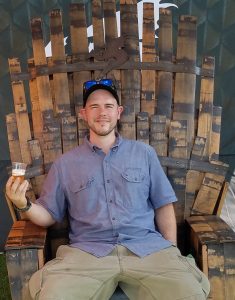
Nathan Heerspink, New Holland Brewing, Holland, MI, USA 

Q: When did you first discover kombucha?

Back in ’06 my neighbor (who was a little old babushka) gave me a strain of kefir grain that she brought from the old country. After my first batch of successful kefir, I was hooked on anything fermented. I started a fermentation station in my home and I grew into a wild fermentation wizard. kvass, sauerkraut, wine, mead and beer, yogurt, but what I really started to appreciate was kombucha!

Q: Why did you start your own kombucha company? 

I always knew about the healing benefits of kombucha, but never thought I could make a living from it! I was hired into New Holland Brewing in 2012 working as a prep/line cook, at that moment I saw wild fermentation more at a culinary point of view. About 2014 I moved to the brewery’s production facility and learned to brew more at an industrial scale. I moved more into sour beer and started to combine the beer industry methods into large scale kombucha brewing. Now I provide funky brews to both locations under the NHBC name.

Q: What is your favorite flavor of kombucha? 

It’s a tie between Unity Vibration out near Ann Arbor, MI, they make a great Bourbon Peach Boocha, and Soma Kombucha in Portland, OR has a fennel CBD jun that’s amazing!

Q: What is your former/current other life or career?

Before my main path was wild fermentation, I was following the life of culinary artistry. Cooking was a big passion of mine. I loved the lifestyle, the creativity and the people in the industry. After 15 years of working in a lot of kitchens, I felt it was time to move on and expand my expertise.

Q: What is a saying that you live by?

Life’s a garden, just dig it!

Meet Our Members – SeaBucha Kombucha (CA)

Gayle Hartwick, SeaBucha Kombucha, Crescent City, CA, USA  Q: When did you first discover kombucha? I first tasted Kombucha made by a friend sometime in the late 1990’s, but at that time I was a Kefir devotee and was not impressed with the vinegary taste of her kombucha. Several years later, I was given a […]


Thursday, 5th December 2019

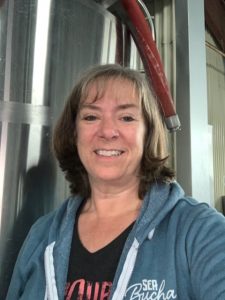
Gayle Hartwick, SeaBucha Kombucha, Crescent City, CA, USA 

Q: When did you first discover kombucha?

I first tasted Kombucha made by a friend sometime in the late 1990’s, but at that time I was a Kefir devotee and was not impressed with the vinegary taste of her kombucha. Several years later, I was given a SCOBY and brewed kombucha to fit my and my family’s taste. I haven’t stopped making and drinking kombucha since.

Q: Why did you start your own kombucha company? 

My family and friends started SeaQuake Brewing (craft beer) in Crescent City, California in 2015, but I am not a beer drinker so I wanted to provide an option in our taproom for others like myself. I started with the goal to have two or three flavors of kombucha on tap. SeaBucha was well received, so it didn’t stop there. We now keep at least six different flavors on tap so that customers can have a “flight” of kombucha. It didn’t stop there either. People traveling through our town who tasted SeaBucha asked where they could purchase it outside of our brewery. So, we purchased more brewing equipment and used our canning line to can SeaBucha in 16 ounce cans and began distributing it throughout Northern California.

Q: What is your favorite flavor of kombucha? 

My favorite SeaBucha flavors are Pineapple, Blueberry, and Blackberry. My favorite flavor made by another company is Chetco Brewing’s Pina Colada Kombucha.

Q: What is your former/current other life or career?

Prior to brewing SeaBucha, I was a public school teacher. Most of my 32 years of teaching, I taught middle school students Language Arts. I finished my career teaching fourth and fifth graders.

Q: What is a saying that you live by?

A saying that I live by is “If something stinks, change it”.


Posts navigation

Older posts
Newer posts

About Us

    • KBI Board
    • KBI Team
    • Committees & Volunteers
    • Bylaws
    • KBI Jobs

Advertising

    • Overview
    • Print
    • Digital
    • Events
    • Sponsored Content

Recent Posts

  • President's Tour Kombucha Chat | Circle Bev
  • Happy International Women's Day to KBI's Fempreneurs
  • Meet Our Members –Fermentation Farm (CA)
  • Meet Our Members – Pigeon Cove Ferments (MA)
  • Meet Our Members – Tonica Kombucha (CAN)

Contact Us

8950 W Olympic Blvd, Ste 494,
Beverly Hills, CA 90211

Facebook Instagram Twitter Youtube Email

Subscribe to our Newsletter

Subscribe

Kombucha Brewers International © 2025