

Dan McKenna, Kombucha Baby, North Vancouver, BC, Canada
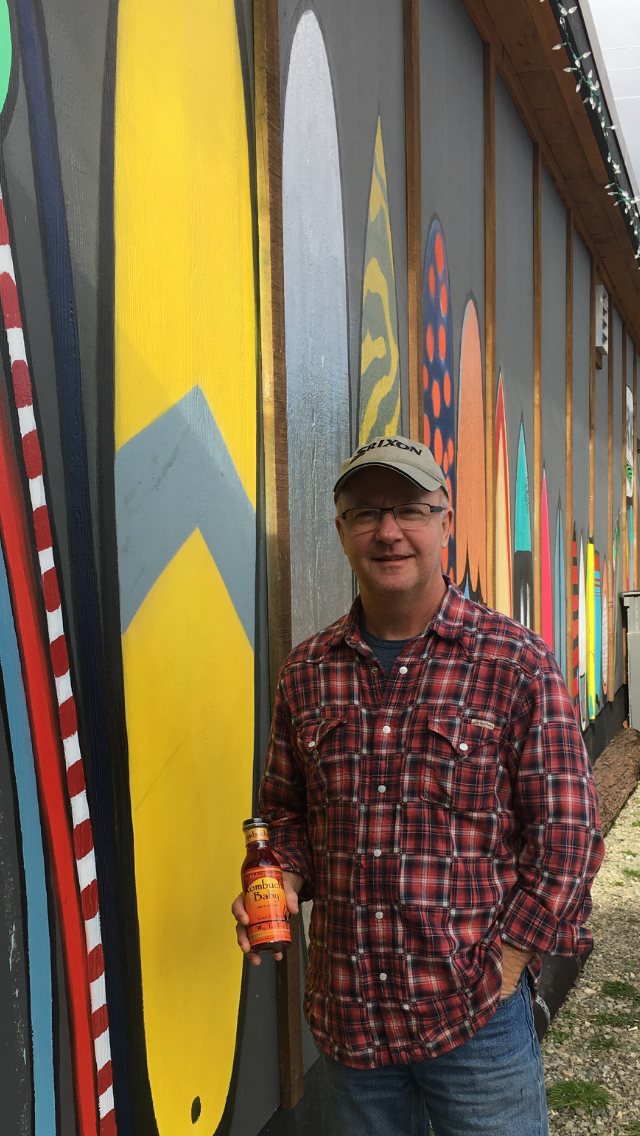
Q: When did you first discover kombucha?
I had my first sip of kombucha 2 years ago and thought “What the Heck!” But it grew on me and I began to brew my own for health reasons. It is my go to drink after a run, cycle, hike, and beverage of choice at dinner.
Q: Why did you start your own kombucha company?
Funny enough my passion for kombucha just morphed into Kombucha Baby Brewing Co., and I’m very excited it did. Family and friends urged me to make my brew available to the local market and I am grateful for the positive support I receive from people that are enjoying our brew.
Q: What is your favorite flavor of kombucha?
My favourite flavour now is GT’s Mojito. I love the mix of mint, lemon and maqui berry.
Q: What is your former/current other life or career?
I’ve been working with Non-profit Housing organizations for the past 10 years, assisting them with furnishing rooms for the homeless that they are trying to get off the street and into a safe place.
Q: What is a saying that you live by?
Gratitude is the catalyst to abundance and giving.









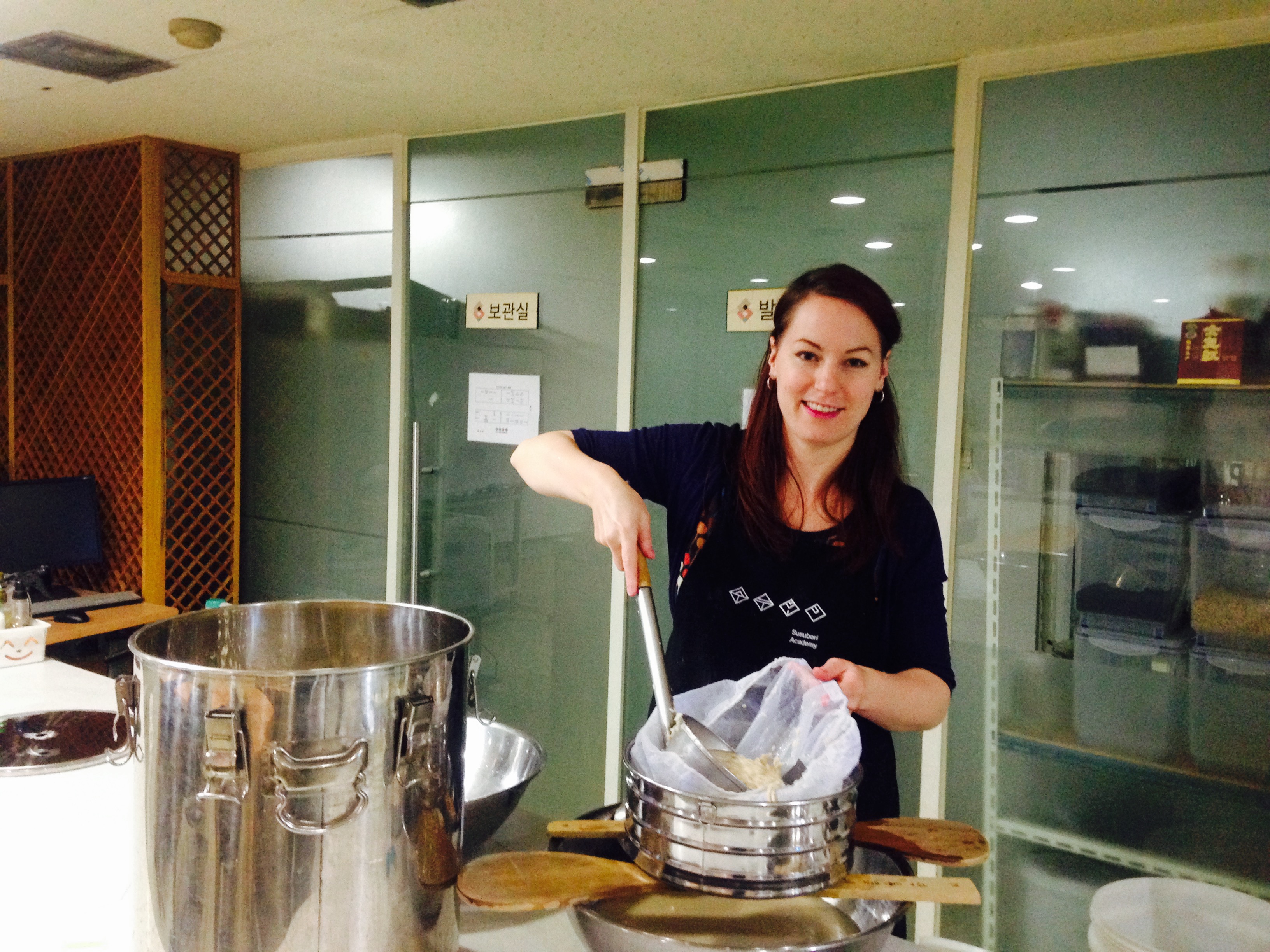




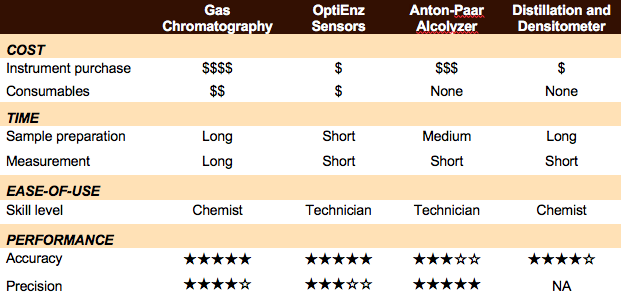
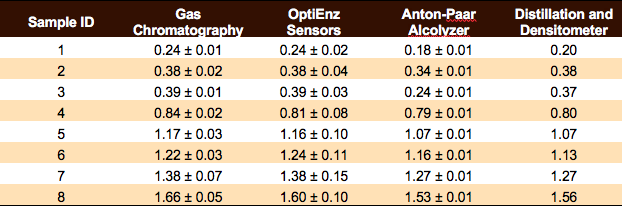
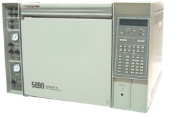 Headspace gas chromatography – flame ionization detection (HS/GC-FID) measurements and sample preparation were performed using AOAC methods for determination of ethanol in kombucha (AOAC 2016.12). Analysis was completed on a HP 5890 Series II gas chromatograph (four measurements per sample) with a Restek Stabilwax-DA capillary column using nitrogen as the carrier gas, and resolution of methanol, ethanol, isopropanol, 1-propanol, and acetone was possible using this setup. A calibration curve was constructed using Cerilliant ethanol standards purchased from Sigma-Aldrich.
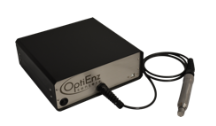 Ethanol measurements were performed using an OptiEnz Sensors ethanol sensing system. The instrument was calibrated over 10 minutes using prepared ethanol standards. Ethanol measurements (six measurements per sample) were made by diluting 0.1 mL of sample into 50 mL of buffer, immersing the sensor probe into the dilute solution and allowing the system to stabilize for three minutes.
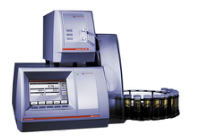 Density and Alcolyzer measurements were performed using an Anton-Paar DMA 4500 M-EC with Enhanced Calibration for Ethanol paired with an Alcolyzer Beer ME module and Sample Handling Unit (Xsample 22). The instrument was calibrated with degassed, deionized water and achieved a density measurement of 0.99820 ± 0.00001 g/mL at 20ºC. Sample analysis (six measurements per sample) was performed by pumping 40 mL of sample through the system, bringing the sample temperature to 20.00 ± 0.01°C, and then collecting density and Alcolyzer measurements.
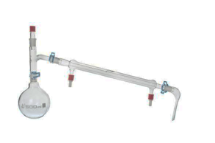 Kombucha samples (100 mL per sample) were distilled according to the TTB-recommended distillation-specific gravity method (AOAC 935.21). Density measurements (one measurement per sample) were made using the Anton-Paar densitometer.